

Voice search is changing the way people search online. With the growing use of voice assistants like Google Assistant, Siri, and Alexa, users now prefer speaking instead of typing. Because of this shift, SEO for voice search has become an essential part of digital marketing in 2026.
If your website is not optimized for voice search, you are missing out on a large portion of potential traffic.
What Is Voice Search SEO?
Voice search SEO is the process of optimizing your website so it appears in search results when users perform voice-based searches.
Unlike traditional searches, voice search queries are:
- Longer
- More conversational
- Question-based
For example, instead of typing “voice search SEO tips”, users ask:
“How to do voice search SEO for my website?”
Optimizing for these natural-language queries helps search engines understand your content better and deliver it as a voice answer.
Why Voice Search Matters in 2026
Voice search usage is increasing rapidly because it is fast, hands-free, and convenient. People now use voice search for daily tasks such as finding businesses, getting directions, and searching for information.
Some key reasons why voice search SEO is important:
- Voice search improves user experience
- It increases chances of ranking for featured snippets
- It boosts local and mobile traffic
Search engines now prioritize websites that provide clear, direct answers to voice-based queries.
Benefits of Voice Search Optimization
Optimizing your website for voice search offers several advantages:
- Better visibility in voice search results
- Higher chances of appearing in featured snippets
- Improved local SEO performance
- Increased organic traffic
When done correctly, your voice search strategy helps your website stay competitive in modern search results.
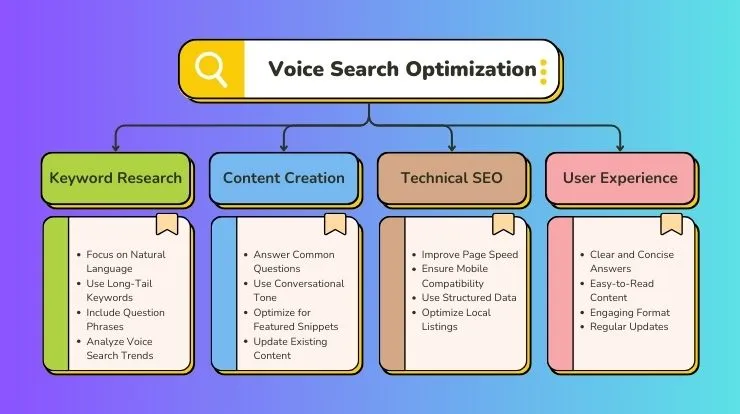
How to Do Voice Search SEO in 2026
Below are proven and effective ways to optimize your website for voice search.
Top Strategies to Optimize for Voice Search

1. Use Conversational Keywords
Voice searches sound like normal conversations. Instead of short keywords, users ask full questions.
Example:
- Text search: voice search SEO
- Voice search: What is voice search SEO and how does it work?
Focus on:
- Long-tail keywords
- Question-based phrases
- Natural language
Important keywords to include naturally:
- seo for voice search
- voice search
- what is voice search seo
- how to do voice search seo
2. Optimize Content for Questions and Answers
Voice assistants prefer content that answers questions clearly and quickly.
To optimize:
- Use question-style headings
- Provide short and direct answers
- Add bullet points and numbered lists
This improves your chances of ranking for voice search results and featured snippets.
3. Focus on Local SEO
Many voice searches are location-based, such as:
“Which SEO agency is near me?”
To improve local voice search visibility:
- Optimize your Google Business Profile
- Add city and location keywords
- Keep your business details consistent online
Local optimization plays a major role in your voice search success.
4. Improve Website Speed and Mobile Experience
Most voice searches happen on mobile devices. If your website is slow or not mobile-friendly, users leave immediately.
Make sure your website:
- Loads fast
- Works smoothly on mobile
- Has clean design and simple navigation
Good user experience supports both voice search SEO and overall rankings.
5. Create FAQ-Based Content
FAQ pages work extremely well for voice search. They match exactly how users ask questions.
Example questions:
- What is voice search SEO?
- How does voice search work?
- How to optimize a website for voice search?
Answer these clearly to improve your voice search visibility.
6. Use Structured Data (Schema Markup)
Schema markup helps search engines understand your content better. It increases the chance of your website being selected as a voice search answer.
Use schema for:
- FAQs
- Business information
- Articles
Structured data strengthens your SEO for voice search strategy.
Tools for Voice Search SEO
You can use the following tools to improve voice search optimization:
- Google Keyword Planner (for conversational keywords)
- AnswerThePublic (for voice-based questions)
- SEMrush (for keyword and competitor research)
How to Measure Voice Search Performance
Tracking performance helps you improve results over time.
Monitor:
- Organic traffic growth
- Rankings for long-tail keywords
- Mobile user engagement
Consistent tracking helps refine your voice search strategy.
Conclusion
Voice search is no longer optional. It is a critical part of SEO in 2026. By understanding what is voice search SEO, using conversational keywords, improving mobile experience, and optimizing for user intent, you can increase visibility and organic traffic.
Voice search SEO is not about shortcuts, it’s about answering real questions clearly.
Start optimizing today, because voice search is already shaping the future of SEO.